
GirderGroup

FCC CPNI and Data-Breach Rules: What Communications Firms Must Retain

Carriers and communications providers sit under recordkeeping and breach-notification duties as strict as any in finance. A reference to CPNI, the 2024 breach rule, and the records behind them.
Sarah MitchellUS agencies correspondent · New York
February 19, 2024 · 8 min read
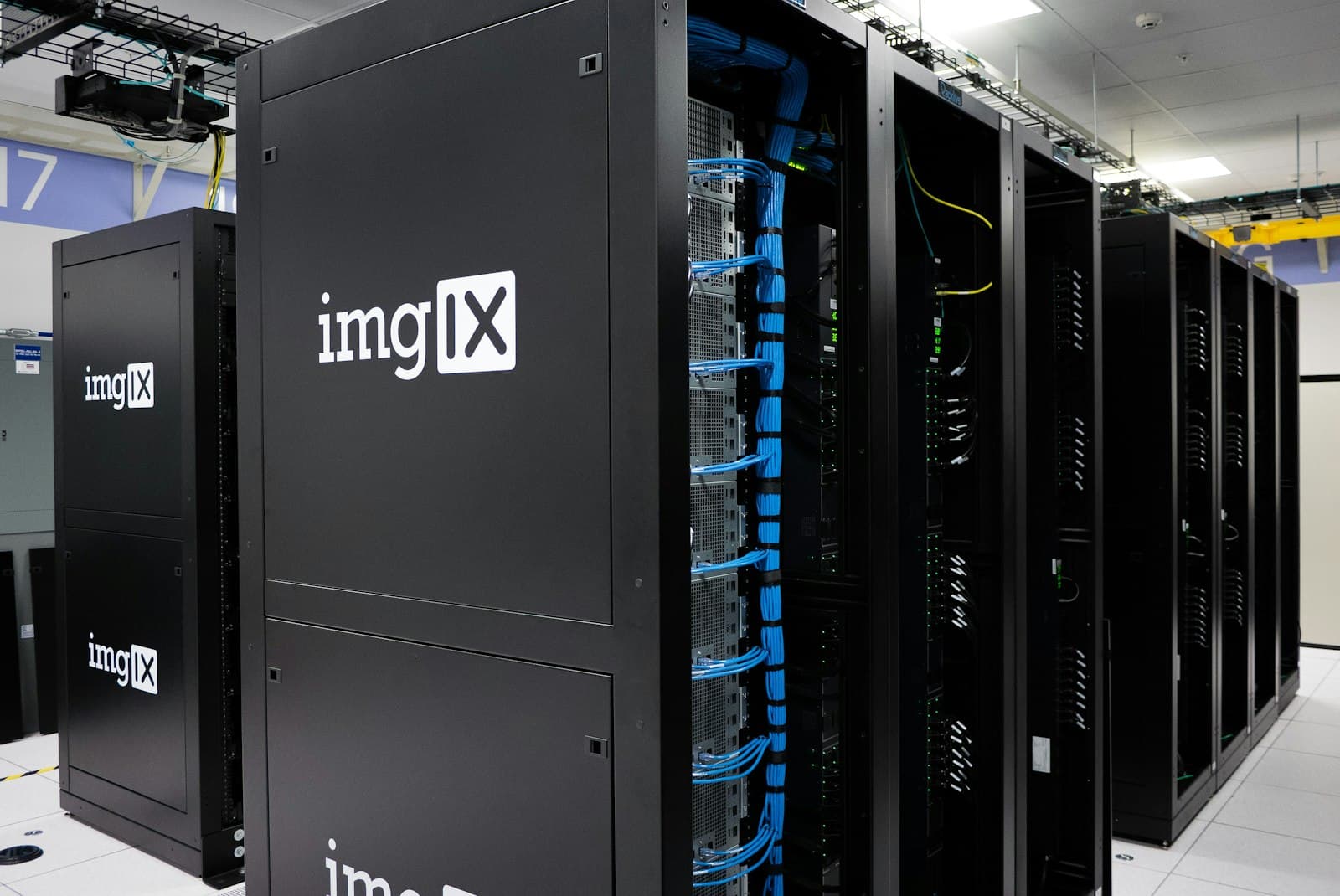
A telecommunications network operations centre, illustrating FCC communications compliance.
A telecommunications network operations centre, illustrating FCC communications compliance. · Image: Girder Group

A telecom carrier can be fined for a data breach it disclosed too slowly, even if it disclosed at all. In December 2023 the FCC adopted an updated breach-notification rule that widened what counts as a reportable breach and tightened the clock (FCC, 2024). For communications firms, the obligation to protect and account for customer data is not a financial-sector borrowing; it has its own regime, and it turns on records.

Key takeaways

  • Customer Proprietary Network Information (CPNI) rules require carriers to protect, and account for, who accessed customer call and usage data.
  • The FCC's updated breach rule broadened the definition of a reportable breach and set notification timeframes.
  • The TCPA turns consent into a records question: a firm defends a robocall claim with proof of consent, not assertions.
  • As with financial recordkeeping, the failure is usually an access or consent log nobody can produce on demand.

What the rules require

CPNI, Customer Proprietary Network Information, is the data a carrier learns about a customer by providing service: numbers called, services bought, usage. The FCC’s CPNI rules require carriers to protect it, restrict access, train staff, and file annual compliance certifications (47 CFR §§ 64.2001-64.2011). The control that matters in an investigation is the access record: who inside the carrier touched a customer’s CPNI, and under what authority.

The breach regime raises the stakes. In its 2024 update, the FCC expanded the definition of a reportable breach to include inadvertent disclosures and broadened the categories of covered data, while setting notification timeframes to the Commission, law enforcement, and customers (FCC, 2024). A firm cannot notify within a deadline it cannot detect, which makes logging and retention the precondition for compliance, not an afterthought.

The Telephone Consumer Protection Act adds a third records duty. The TCPA restricts certain calls and texts without prior express consent, and enforcement, and private litigation, routinely turns on whether the caller can produce that consent (FCC, telemarketing and robocalls). Consent that is not recorded, timestamped, and retrievable is, for legal purposes, consent that did not happen.

“The obligation to protect customer data is not a financial-sector borrowing; it has its own regime, and it turns on records.”

What this means operationally

Log CPNI access at the record level. The annual certification is only credible if the underlying access trail exists. Capture who viewed or exported customer data, when, and why.

Instrument breach detection to the notification clock. Work backwards from the FCC’s timeframes: if you must notify within a deadline, your detection and triage have to be faster than it.

Treat consent as a retained record. For every TCPA-governed contact, keep the consent artefact, source, timestamp, scope, where it can be produced years later.

Reconcile the same way finance does. The recurring failure is an access or consent log that exists in theory and cannot be produced in practice.

What enforcement looks like

The FCC does not publish a uniform CPNI penalty schedule, but enforcement actions give the picture. In 2023 and 2024, the Commission pursued carriers for failing to protect CPNI after data brokers purchased records directly by impersonating customers or their representatives, a practice known as pretexting. AT&T, T-Mobile, and Verizon paid a combined $196.3 million in 2024 to resolve allegations that they sold customers' real-time location data to aggregators who resold it to bail bondsmen and bounty hunters, with no adequate controls on downstream use (FCC, 2024). The finding was not that a breach occurred, it was that the access and use controls were insufficient.

On the breach side, the 2023 update to the notification rule tightened the clock because the FCC had seen repeated examples of carriers waiting to notify until they had certainty rather than a reasonable determination. The rule now uses a "reasonably determined" standard: a carrier that waits for forensic confirmation before starting the notification clock is likely already late. Detection velocity is itself a compliance requirement.

TCPA enforcement comes from both the FCC and private plaintiffs. Class actions under the TCPA can aggregate statutory damages of $500-$1,500 per violation at scale; a campaign of 500,000 unconsented contacts could generate exposure in the hundreds of millions before punitive enhancement. The deterrence arithmetic is why consent architecture is not a nice-to-have.

How AI could address the gap

The communications compliance problem is, structurally, the financial one in a different uniform: prove who accessed protected data, and prove a customer agreed. Both are reconciliation and retrieval tasks before they are anything else.

AI-assisted systems can watch CPNI access for patterns that warrant review, keep the consent-to-contact map continuously reconciled so a campaign never runs against a withdrawn consent, and pre-index breach-relevant logs so a notification deadline is met with retrieval rather than a scramble. The accountable person still owns the certification and the breach decision; the machine keeps the evidence current. It is the same division of labour we describe for SEC recordkeeping.

Building the platforms, portals, and systems that make these obligations provable is what Girder Group does.

Sources

  1. 1.FCC updates data breach notification rules, 2024.Federal Communications Commission
  2. 2.FCC fines major wireless carriers for sharing customer location data, 2024.Federal Communications Commission
  3. 3.47 CFR §§ 64.2001-64.2011, CPNI rules, current text.Electronic Code of Federal Regulations
  4. 4.Telemarketing and robocalls (TCPA overview).Federal Communications Commission

Common questions

What is CPNI and why does it matter for recordkeeping?
CPNI — Customer Proprietary Network Information — is the call, usage, and billing data carriers generate about customers. FCC rules require carriers to protect it, restrict who can access it, and certify compliance annually. The access logs backing that certification are records a carrier must be able to produce.
How long does a carrier have to report a data breach under the updated FCC rule?
Under the December 2023 update, carriers must notify the FCC, FBI, and Secret Service within seven business days of reasonably determining a breach occurred, and must notify affected customers no later than 30 days after that determination.
Does TCPA require written consent?
For autodialed or pre-recorded calls and texts to mobile numbers, the TCPA requires prior express written consent. Consent records must be maintained and retrievable, because the carrier or caller bears the burden of proving consent if a consumer disputes it.

Sarah Mitchell

US agencies correspondent · Girder Group · New York

Sarah Mitchell covers US federal regulators, the SEC and FINRA, the FTC, and the FCC, with a focus on recordkeeping and data obligations, from Girder Group's New York desk.


Meet the desk

Work with Girder Group

The systems that make these obligations provable.

Girder Group builds the platforms, portals, and cloud systems that regulated organisations run on. Talk to the firm behind this research.

Start a conversation

Stay informed

New research in your inbox.

Briefings on recordkeeping and AI governance, published as the rules develop. We never share your address.

Unsubscribe anytime.


