GirderGroup

Nine Layers, One Migration: Securing Cloud Infrastructure Against the Quantum Threat

A STRIDE-based risk analysis of quantum threats across nine cloud architectural layers finds that post-migration PQC environments face new attack vectors that did not exist with classical cryptography. Here is the layer-by-layer picture.

Dwayne ThompsonEngineering, standards & trade editor · Kingston
September 29, 2026 · 9 min read
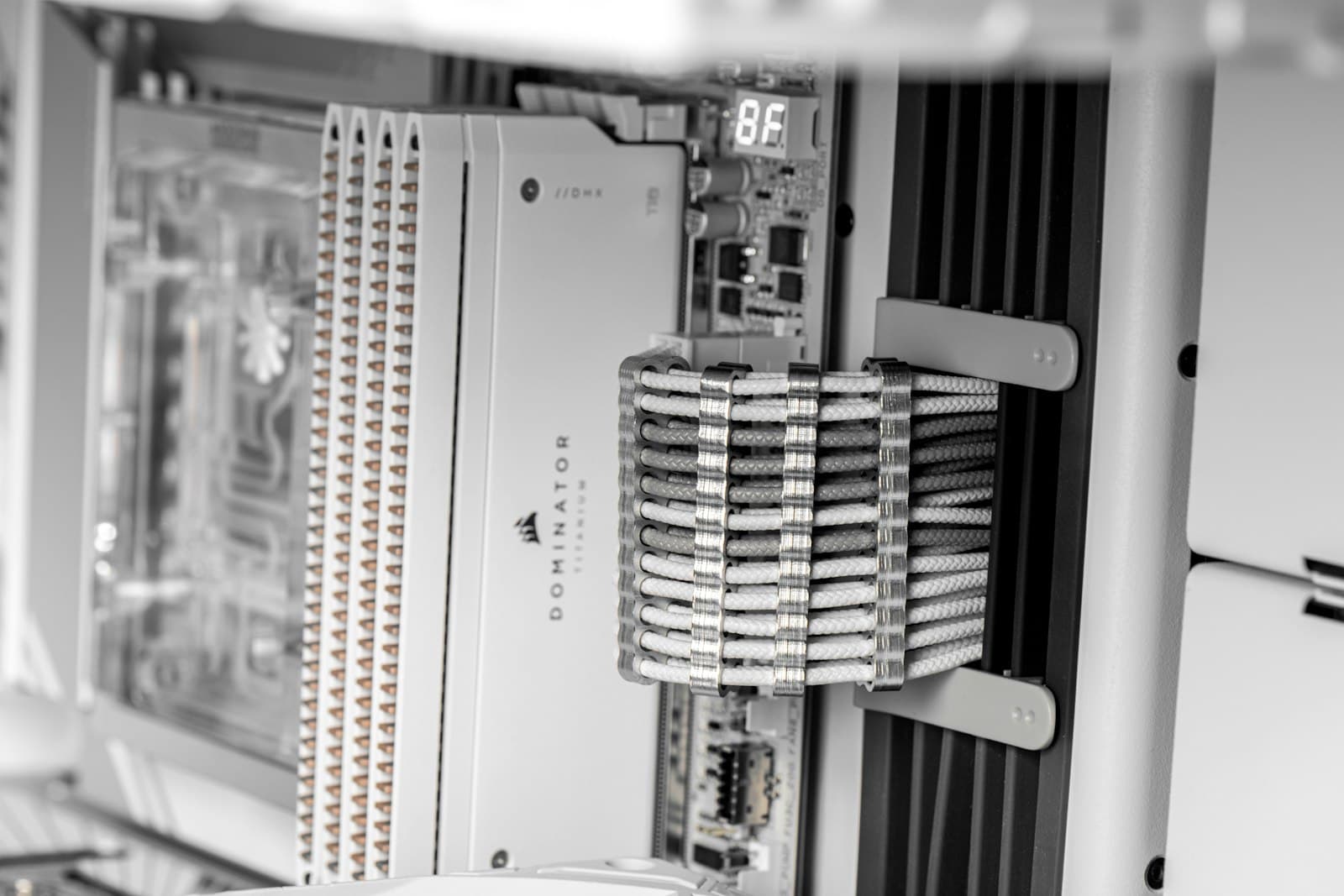
Cloud infrastructure server environment, illustrating nine-layer quantum-safe migration complexity.
Cloud infrastructure server environment, illustrating nine-layer quantum-safe migration complexity. · Image: Girder Group

A research team from the Université de Montréal and York University published a survey in 2025 that mapped the quantum computing threat across nine cloud architectural layers. One finding stood out from the theoretical attack surface: even after a successful migration to post-quantum cryptography, organizations face a new category of vulnerability that classical cryptography did not create. Post-quantum key and ciphertext sizes are 11 to 72 times larger than their classical equivalents, introducing buffer-overflow vectors and injection opportunities that did not previously exist (Baseri et al., arXiv 2509.15653).

Key takeaways

  • The migration from classical to post-quantum cryptography has three distinct risk phases: pre-transition (classical vulnerabilities), hybrid (migration-induced risks), and post-transition (PQC implementation weaknesses). Each phase requires a different defensive posture.
  • PQC key and ciphertext sizes are 11–72× larger than classical equivalents. This creates buffer-overflow vectors, protocol handshake failures, and injection opportunities that are new to the post-migration environment.
  • The nine-layer cloud model — application, data, runtime, middleware, OS, virtualization, server, storage, network — maps distinct quantum threats at each layer. A single migration policy does not address all of them.
  • Major cloud providers (AWS, Azure, GCP) are actively adding hybrid PQC to their TLS stacks and key management services, but organization-specific workloads require independent assessment.

Three phases, three distinct risk profiles

The nine-layer analysis by Baseri, Hafid, and Lashkari structures the quantum migration problem across three temporal phases. In the pre-transition phase, organizations run classical cryptography. Shor's algorithm threatens all asymmetric operations: RSA key exchange, ECDH ephemeral sessions, ECDSA-signed certificates. Grover's algorithm halves the effective security of symmetric keys, weakening AES-128 to approximately AES-64-equivalent strength against a quantum adversary. The risk is one-sided: classical defenses are already compromised in theory, and the "harvest now, decrypt later" attack is already in operation.

In the hybrid phase, organizations run classical and post-quantum algorithms in parallel — the recommended migration approach. The risks here are migration-specific: protocol downgrade paths, where a quantum-capable adversary forces negotiation back to classical algorithms; dual-certificate complexity, where certificate chains carry both classical and PQC credentials and intermediate systems may accept one but not the other; and system heterogeneity, where incompletely migrated infrastructure creates security boundary discontinuities.

In the post-transition phase, classical algorithms have been replaced. The new risk profile is PQC-specific: side-channel attacks on NTT implementations, fault injection against masked decapsulation, and the buffer-overflow and injection vectors created by the larger artifact sizes. This phase is what most migration planning fails to address. The assumption that completing the migration ends the security problem is incorrect.

“A successful migration to post-quantum cryptography does not end the security problem. It shifts it: from the quantum threat to the implementation threat.”

Layer-by-layer: where the threats concentrate

At the application layer, the risks are familiar: web applications that embed hardcoded RSA keys, APIs with hardcoded certificate pins, and session-management libraries that assume fixed-size key material. The PQC-specific addition is that larger public keys and signatures may exceed the maximum message size of existing protocol implementations.

At the data and runtime layers, encryption-at-rest and in-transit both require algorithm migration. Middleware and ORM layers that abstract cryptographic operations create hidden dependencies: a framework update that installs a PQC library may not also update the database encryption driver. At the OS and virtualization layers, kernel crypto APIs, TLS stacks in container runtimes, and hypervisor-level key management all carry classical algorithm assumptions that require explicit updates.

At the network layer — the layer most studied for quantum impact — TLS, IPsec, SSH, and PGP all require migration. A 2024 paper by Baseri, Chouhan, and Hafid analyzing network protocol quantum exposure notes that TLS 1.3's hybrid key exchange extension provides the most straightforward migration path, but protocol-level negotiation failures in intermediate devices (load balancers, deep-packet inspection appliances, CDN edge nodes) are a frequent and underappreciated migration risk.

The hidden post-migration threat: oversized artifacts

The size increase from classical to PQC artifacts is not a mere overhead concern. Baseri, Chouhan, and Ghorbani (2026) document that PQC key and ciphertext sizes are 11 to 72 times larger than their classical equivalents, and flag this as an active security vector. Systems that did not validate input sizes against fixed-size buffers because "a key is at most 512 bytes" are exposed to stack and heap overflows when a 1,184-byte ML-KEM-768 public key arrives. Polymorphic and fileless malware payloads can be embedded in the padding required to meet minimum message sizes in protocols that were sized for ECDSA credentials.

The implication is that post-migration security audits must specifically test for buffer handling at every point where cryptographic objects transit the system: TLS handshake parsing, certificate chain validation, key management APIs, and storage serialization formats.

What AWS, Azure, and GCP are doing

All three major cloud providers have published roadmaps for quantum-safe migration and are actively adding hybrid PQC to key services. AWS began offering hybrid ML-KEM key exchange in its TLS implementation and has added PQC support to the AWS Key Management Service. Azure is integrating hybrid PQC into its certificate issuance infrastructure and into the Azure VPN gateway. GCP has published guidance on migrating customer-managed encryption keys. However, the survey notes that CSP-level migration addresses platform infrastructure, not tenant workloads. Organization-specific applications, databases, and middleware deployed on cloud infrastructure require independent migration assessment.

The STRIDE-based threat taxonomy in the survey also identifies cloud-specific risks that CSP migration does not address: shared-tenancy side-channel attacks on co-located virtual machines, PQC implementation weaknesses in managed runtimes where the JVM or CLR may introduce timing vulnerabilities, and quantum-amplified denial-of-service attacks that exploit the additional computation cost of PQC operations.

What this means operationally

Treat the migration as three separate projects, not one. Pre-transition, hybrid, and post-transition phases have different risk profiles and require different controls. A migration plan that only addresses algorithm replacement misses the hybrid-phase and post-transition risks.

Audit buffer sizes before PQC artifacts flow through systems. Identify every location where cryptographic objects are parsed, stored, or transmitted — TLS handshakes, certificate validators, key management APIs — and verify that buffer allocations accommodate ML-KEM and ML-DSA artifact sizes before migration, not after a parsing failure.

Design for cryptographic agility from the start. The ability to swap algorithms without rebuilding systems is not a luxury feature; it is the operational hedge against future cryptanalytic developments. Abstract cryptographic operations behind stable interfaces, and test that interface with multiple algorithm implementations.

Do not assume CSP quantum-safe upgrades cover your workloads. Cloud provider infrastructure migration and tenant workload migration are separate efforts. Maintain an inventory of cryptographic dependencies in your own code and configuration.

Sources

  1. 1.Baseri Y., Hafid A., and Lashkari A.H., Future-Proofing Cloud Security Against Quantum Attacks: Risk, Transition, and Mitigation Strategies, arXiv 2509.15653v4, September 2025.arXiv
  2. 2.Baseri Y., Chouhan V., and Ghorbani A., Cybersecurity in the Quantum Era: Assessing the Impact of Quantum Computing on Infrastructure, Computers & Security, Vol. 167, 2026.Computers & Security
  3. 3.Baseri Y. and Hafid A., Quantum Security Risks in Networked Environments, Computers & Security, 2024.Computers & Security
  4. 4.NIST SP 800-227 (Initial Public Draft), Recommendations for Post-Quantum Cryptography Migration, 2025.National Institute of Standards and Technology

Dwayne Thompson

Engineering, standards & trade editor · Girder Group · Kingston

Dwayne Thompson writes on compliance engineering, standards (NIST), and trade and logistics regulation (CBP, DOT, FMC), from Girder Group's Kingston desk.
Meet the desk

Work with Girder Group

The systems that make these obligations provable.

Girder Group builds the platforms, portals, and cloud systems that regulated organisations run on. Talk to the firm behind this research.

Start a conversation

Stay informed

New research in your inbox.

Briefings on recordkeeping and AI governance, published as the rules develop. We never share your address.

Unsubscribe anytime.